


Candy Store Business: The Margin Math New Buyers Miss
| BY DANIEL ROTHSTEIN
A full shelf and a busy register look like success, but neither one actually tells a candy or snack retailer what they kept after the bills got paid. Plenty of first-time buyers build their assortment around whatever sells fastest, not around what actually pays, and the gap between those two things is where a lot of preventable losses start.
Revenue Growth Can Hide a Margin Problem
A record sales month feels like proof that a store is doing well, and often it is, but revenue on its own does not say much about what a retailer actually keeps. Gross margin, the difference between what an item sells for and what it cost to acquire, is the number that tells that story, and it can quietly shrink even while total sales climb.
That mistake is easy to make at a much larger scale than a single shelf. A busier register can mask a sales mix that is quietly drifting toward lower-margin items, and nobody notices until the numbers get pulled at the end of a quarter.
The Category Mix Buyers Get Wrong
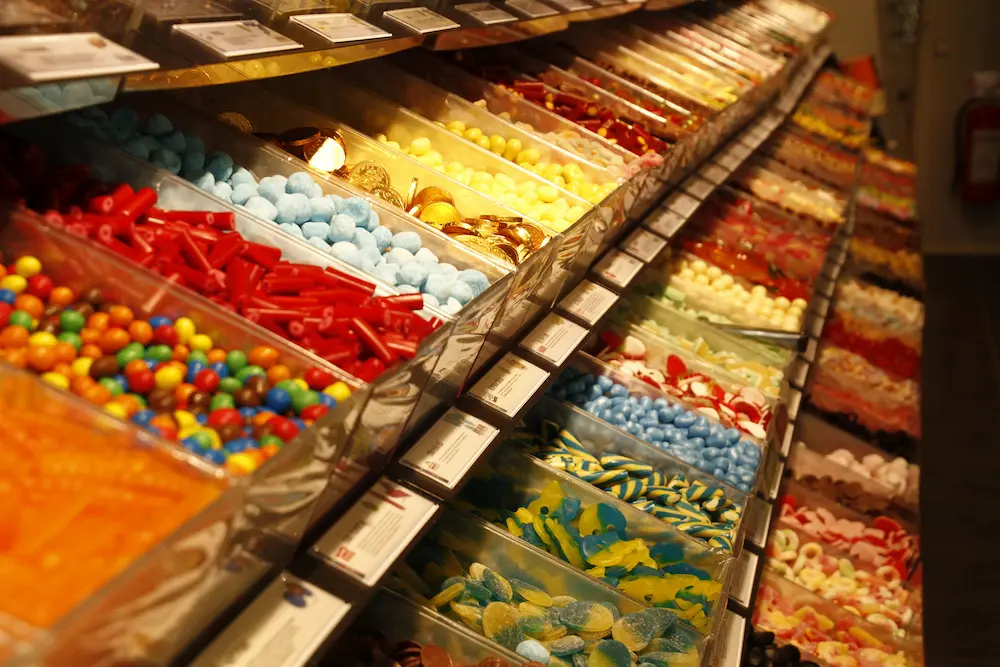
Not every candy category carries the same margin, and new buyers often stock the categories that feel safest rather than the ones that pay the best. Recognizable national brands move fast and reassure a buyer that the shelf looks right, but they typically carry a thinner margin than bulk candy, private label items, or novelty and specialty products a shopper cannot find at a grocery store down the street.
Category strategy matters more now than it used to, since buying habits are shifting underneath retailers in real time. Younger shoppers are a growing part of that shift. Gen Z candy spending grew by 47 percent year over year according to the National Confectioners Association's most recent consumer research, and that group tends to gravitate toward novelty, trending, and bulk formats rather than the standard checkout-lane bars. A category mix built entirely around the safest, most familiar brands may be missing exactly the segment growing fastest.
Case Pricing, Minimum Orders, and the Real Cost of a Small Order
Freight and minimum order thresholds do not scale evenly. A small order absorbs the same shipping cost as a larger one spread across far fewer units, which quietly erodes the margin a buyer thought they had locked in when they looked at the case price alone. Buyers new to wholesale purchasing sometimes calculate margin using only the sticker price on a case, without factoring in what freight actually does to the per-unit cost once the order is smaller than a case-lot minimum.
Redstone's guide to wholesale candy terms every buyer should know and the beginner's guide to buying wholesale candy, soda, and snacks both walk through this kind of order-structure math in more detail, and either is a useful reference before placing a first order with any new supplier.
Shrink, Spoilage, and Markdowns Nobody Budgets For
Shrink shows up differently depending on the format. Self-serve bulk bins are convenient for shoppers and genuinely difficult to fully secure against loss, chocolate softens or melts during a hot summer without climate-controlled storage, and seasonal candy left over after a holiday usually gets marked down rather than sold at full price. None of these show up on a purchase order, which is exactly why they are so easy to leave out of a margin estimate built only from wholesale cost and shelf price.
A buyer who budgets for some amount of shrink and seasonal markdown from the outset ends up with a more honest margin number than one who only discovers the gap once a slow-moving seasonal case gets cleared out at a loss.

A Simple Way to Sanity-Check Margin Before You Reorder
The math itself is not complicated, even if it gets skipped under the pressure of a busy order cycle. Take your retail price, subtract your wholesale cost, and divide the result by the retail price to get your gross margin as a percentage. That wholesale cost figure should include freight, shipping, and other related costs like supplies and fees, not just the case price on an invoice, since two suppliers quoting the same sticker price can still work out to very different landed costs once those extras get added in. A widely used retail rule of thumb, sometimes called keystone pricing, starts by simply doubling the wholesale cost, which works out to a fifty percent gross margin before any other expenses get subtracted. That benchmark moves lower on fast-moving, highly recognizable brands that shoppers expect to see at a familiar price, and it typically needs to move higher on bulk, novelty, or perishable-risk items to absorb the shrink and markdown costs those categories carry.
Running that calculation category by category, rather than once across an entire order, tends to surface exactly where a buyer's real margin is thinner than the total revenue number suggests.
Frequently Asked Questions
What is a good profit margin for a candy or snack store? Fifty percent gross margin is a common starting benchmark, sometimes called keystone pricing, though it should move lower for high-traffic brand-name items and higher for bulk, novelty, or perishable-risk categories rather than applying one number to an entire order.
Why can revenue increase while margin shrinks? A sales mix that quietly shifts toward lower-margin items, along with unbudgeted shrink or spoilage, can grow total sales while gross margin actually declines.
How do small wholesale orders affect margin? Freight and minimum order costs get spread across fewer units on a small order, which raises the real per-unit cost beyond what the case price alone suggests.
What causes unplanned margin loss in candy retail? Shrink from self-serve bulk bins, spoilage or melting from poor climate control, and markdowns on leftover seasonal inventory are the most common sources that rarely show up on a purchase order.
A full shelf and a busy register are not the same thing as a healthy margin, and the buyers who check their category math regularly tend to catch a drifting number before it becomes a real problem. Set up a wholesale account with Redstone to start building a category mix based on real margin, not just what looks good on the shelf.